80 3D Embroidery Halloween Patterns
A Designer’s First Look: Playful, Bold, and Boutique-Ready
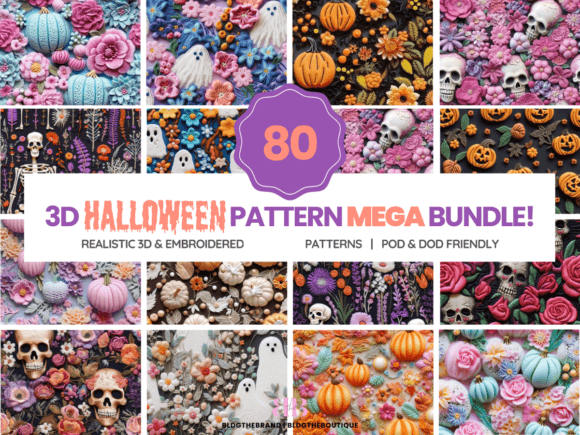
As an embroidery designer who’s developed collections for small clothing brands and Etsy sellers for over a decade, I opened 80 3D Embroidery Halloween Patterns expecting charm—but what stood out immediately was its confident visual personality. These aren’t timid clipart ghosts or generic pumpkins. They’re richly layered, with intentional faux-stitching depth, dimensional shading, and strong silhouettes that read clearly at 3–4 inches wide. The mood leans playful and bold—not overly cute or spooky—making them ideal for boutique apparel that balances seasonal fun with wearable sophistication. Whether it’s a stitched-on witch hat with subtle thread texture or a layered bat with lifted wings, each pattern carries decorative strength without sacrificing clarity. It feels premium in execution, yet accessible for small-batch production.
Sweatshirt & Hoodie Performance: Where Dimension Meets Comfort
80 3D Embroidery Halloween Patterns shines on neutral sweatshirts and pastel hoodies—the kind your customers photograph in natural light for Instagram Stories. On heather gray fleece, the faux-embroidery contrast pops beautifully without needing metallic thread. For chest placement (a go-to for small shop product consistency), medium-sized motifs like jack-o’-lantern faces or crescent moons hold clean lines even on ribbed fabric. Sleeve accents work well with narrower repeats—think tiny bats or candy corn borders—especially when aligned with seam lines to minimize hoop distortion. Back designs scale impressively: larger repeating files create cohesive, immersive statements on oversized hoodies. Just avoid placing dense stitch areas directly over shoulder seams or curved hoods unless you’ve tested stabilizer support first.
Beyond Sweatshirts: Versatility Across Boutique Merchandise
This bundle extends thoughtfully beyond apparel. On denim jackets, the patterns add tactile interest without overwhelming the fabric’s ruggedness—ideal for handmade product listings where authenticity matters. Tote bags benefit from the repeat-friendly nature of many files; a staggered ghost motif across canvas reads as custom, not mass-printed. For lifestyle product photos and printable mockups, the 3D effect translates smoothly into realistic shadows and highlights—boosting perceived value in Etsy listings and social media graphics. As a commercial embroidery designer, I appreciate how these Graphics support visual consistency across a seasonal collection: same stitch language on t-shirts, hoodies, and totes strengthens brand identity and helps customers recognize your boutique brand at a glance.
What Works—and What Needs Careful Planning
Not every design in 80 3D Embroidery Halloween Patterns is equally forgiving. Tiny lettering (like “Boo” in script) may blur on stretchy fabric or low-thread-count cotton tees unless stabilized with cutaway and hooped tightly. Dense stitch areas—especially around layered eyes or textured cobwebs—require testing on scrap fleece or French terry to confirm thread tension and fabric puckering won’t compromise the finished product. Curved surfaces (like the front of a baseball cap or the rounded pocket of a hoodie) demand careful placement; consider simplifying or rotating motifs to follow the grain. Dark garments? Absolutely viable—but review thread color contrast in your embroidery software first. Lighter thread shades lift the 3D illusion; deep-navy or charcoal threads anchor it more subtly.
How These Patterns Elevate Your Small Shop Presence
Using 80 3D Embroidery Halloween Patterns thoughtfully does more than fill a seasonal calendar—it builds buyer trust. Customers scrolling Etsy or Instagram respond to cohesive, professionally rendered designs. When your hoodie chest logo has the same dimensional polish as your tote bag graphic, it signals intentionality. That consistency tells shoppers you’re not just selling apparel—you’re offering a curated experience. For handmade business owners, this level of visual polish bridges the gap between craft and commerce. It supports higher price points, improves product recognition in crowded feeds, and encourages repeat engagement—especially when paired with lifestyle photography that highlights texture and drape.
Practical Notes Every Embroidery Designer Should Check
Before committing to full production, always:
- Test one design on scrap fabric matching your target garment—fleece, French terry, and cotton jersey behave very differently under needle and thread.
- Confirm stabilizer choice: medium-weight cutaway works best for dense areas on knits; tear-away suffices for stable wovens like denim or canvas.
- Review thread color contrast—especially for dark apparel—using your machine’s preview mode or embroidery software.
- Verify hoop size compatibility. Some larger back designs may require 5x7" or bigger hoops; check Creative Fabrica product details before digitizing or stitching.
- Inspect stitch density visually—look for tight fills that could cause stiffness on lightweight tees or excessive bulk on cozy hoodies.
- Compare placement options across garment types: chest, sleeve, back, and pocket placements all affect visual balance and wearability.
- Double-check licensing terms on Creative Fabrica before selling finished apparel—these are digital embroidery files intended for commercial embroidery products, but usage rights vary by seller.
Final Thoughts for Creative Entrepreneurs
If you're planning a Halloween collection for your small shop—or refreshing your Creative Fabrica embroidery library for next season—80 3D Embroidery Halloween Patterns delivers real design flexibility without sacrificing boutique appeal. It’s not just quantity; it’s curated variety with consistent quality. Whether you’re an Etsy seller building seasonal bundles, a local embroidery shop adding holiday flair to custom apparel, or a creative entrepreneur launching a limited-run hoodie line, these Patterns offer professional-grade starting points. Used intentionally—with attention to fabric, stabilizer, and placement—they help turn everyday garments into memorable, market-ready pieces. And in a landscape where handmade product stands out through detail and care, that dimensionality makes all the difference.