Cute Bunny Christmas
First Impressions: Sweet, Seasonal, and Steeped in Story
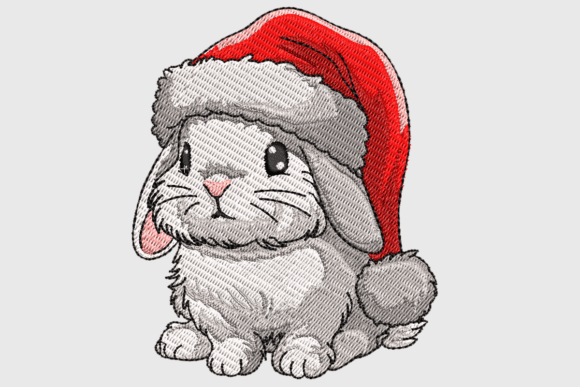
As an embroidery designer who’s tested hundreds of holiday motifs for small shops and Etsy sellers, Cute Bunny Christmas landed with immediate warmth—not just festive cheer, but quiet storytelling. It’s not a loud, glittery Santa or a cartoonish reindeer. Instead, it’s a cozy winter scene: a soft-eyed bunny wearing a tilted Santa hat, nestled among holly leaves and delicately scattered snowflakes. The mood is gentle, nostalgic, and tender—ideal for customers seeking charm over cliché. It reads as handmade, not mass-produced; playful without being childish, seasonal without feeling dated. For baby embroidery or wedding gift design, that emotional resonance is gold.
Where This Design Truly Shines
Cute Bunny Christmas excels where sentiment meets utility. Picture it stitched onto a gauzy muslin baby blanket—soft enough for newborn skin, sweet enough to become a keepsake. On a linen pillow cover? It adds whimsy to a neutral nursery without overwhelming. As an embroidered towel for a boutique kitchen line? The snowflakes and holly translate beautifully into subtle texture—elegant but never stiff. Even on a custom tote bag for a local craft fair, it stands out with quiet confidence: approachable, memorable, and unmistakably *handmade*.
For Etsy sellers and small shop owners, this design bridges multiple audiences: new parents ordering personalized nursery decor, couples wanting a lighthearted wedding keepsake (think “Our First Christmas Together” hoop art), or grandparents commissioning a custom apron for their adult child’s holiday kitchen. Its versatility makes it a smart digital embroidery file investment—not just for Christmas, but for year-round gifting when paired with thoughtful presentation.
Thoughtful Placement Matters
Like any strong machine embroidery design, Cute Bunny Christmas rewards intentionality. Avoid placing it on highly textured fabric like thick terry cloth towels unless you’ve tested stabilizer layers thoroughly—snowflake details can blur. Similarly, stretchy baby onesies demand careful hooping and lightweight cutaway stabilizer; the bunny’s facial features and hat brim need crisp definition. On curved surfaces—like a rounded mug cozy or a contoured pillow insert—consider simplifying or repositioning elements to avoid distortion.
Dark fabric? Absolutely viable—but confirm thread colors contrast well before stitching. A light gray bunny on navy linen looks sophisticated, but pale snowflakes may vanish without metallic or high-sheen thread. And if your customer plans frequent washing (baby blankets, kitchen towels), verify stitch density supports durability—tight fills hold up better than open satin stitches over time.
Why Customers Choose—and Keep—This Design
Giftability isn’t just about prettiness. It’s about trust. When a customer sees Cute Bunny Christmas on your product page—a clean printable mockup showing it on a folded cotton blanket, not just a flat PNG—they instantly grasp its scale, texture, and care. That visual clarity builds perceived value. Handmade quality reads in the balanced spacing between holly leaves and the subtle layering of snowflakes. No overcrowding. No frantic detail. Just considered composition.
That translates directly to buyer engagement: higher cart conversion, fewer “Is this really embroidered?” questions, and more repeat orders. Parents love it because it feels timeless—not tied to one trend. Wedding clients appreciate its softness amid formal traditions. And craft fair shoppers pause longer at booths featuring it, drawn by its warmth and narrative pull. In short, Cute Bunny Christmas doesn’t just decorate a product—it deepens the emotional connection between giver, receiver, and maker.
Practical Embroidery Notes You Can’t Skip
Before stitching your first customer order, treat Cute Bunny Christmas like any commercial embroidery file worth your reputation:
- Test on scrap fabric that matches your intended product—same weight, weave, and stretch.
- Check thread color contrast across light and dark fabric mockups. Holly greens and red berries should pop, not fade.
- Confirm hoop size compatibility. Does it fit comfortably in your most-used hoop—or will you need re-hooping mid-stitch?
- Review stitch density. High-density fills work on stable fabrics like quilting cotton; lighter fills suit delicate linens or baby knits.
- Match stabilizer to fabric: cutaway for knits, tear-away for stable wovens, and medium-weight cutaway for towels or napkins.
- Inspect small details after stitching—especially the bunny’s eyes and snowflake tips. If they’re fuzzy or skipped, adjust tension or needle size.
- Verify commercial licensing. If you’re selling finished products (not just the digital embroidery file), ensure your license permits small shop production and resale.
Final Thoughts for Makers and Sellers
Cute Bunny Christmas isn’t just another holiday motif—it’s a thoughtful tool for building meaningful handmade products. It invites personalization without demanding complexity. You don’t need 20 thread changes or specialty needles to make it shine. What it does require is attention: to fabric choice, stabilizer pairing, and customer context. Use it on a baby embroidery set, and it becomes a milestone marker. Stitch it onto a wedding gift pillow cover, and it quietly celebrates new beginnings. Place it on a custom tote for a local café, and it adds warmth to everyday life.
For Etsy sellers juggling listings and fulfillment, this design saves time without sacrificing charm. For gift shop owners curating seasonal collections, it offers cohesion across categories—from blankets to aprons to keepsake hoops. And for every small business owner who values authenticity over algorithm-chasing, Cute Bunny Christmas delivers what matters most: a genuine, stitch-by-stitch invitation to care.