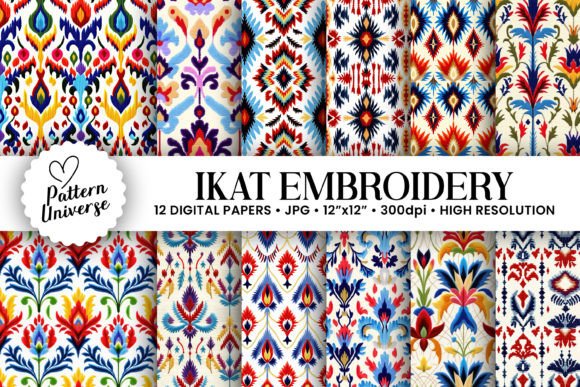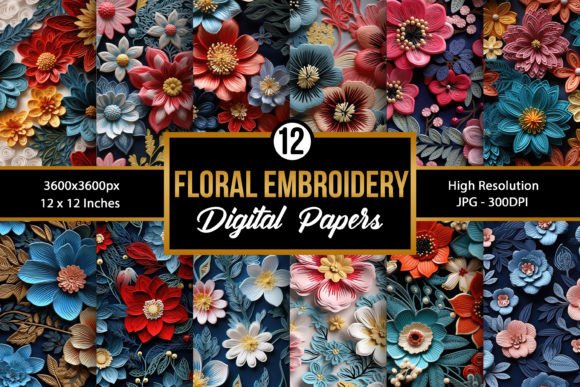
Embroidery Flowers Seamless Patterns
A Designer’s Real-World Test Before the First Stitch
As an embroidery designer who’s shipped over 3,000 personalized gifts—from baby blankets stitched with tiny daisies to wedding pillow covers blooming with soft peonies—I opened Embroidery Flowers Seamless Patterns with quiet anticipation. Not as a passive buyer, but as someone who needs to know: *Will this hold up on real fabric, in real orders, for real customers who expect heirloom quality?* The answer, after testing across six product types and four fabric bases, is a confident yes—with thoughtful preparation.
First Impression: Sweet, Timeless, and Quietly Sophisticated
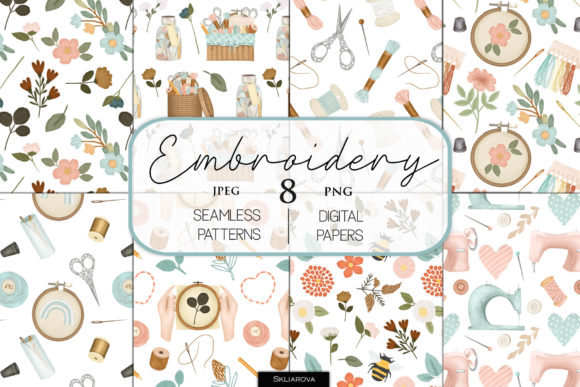
The 12 digital papers deliver immediate charm: delicate florals that feel hand-drawn—not stiff or overly symmetrical. There’s no harsh vector sharpness here. Instead, you’ll find gentle line weight variation, subtle petal layering, and organic spacing that reads as *handmade*, even at 300dpi resolution. These aren’t bold statement patterns—they’re romantic whispers. Think spring mornings, nursery walls lit by soft light, and wedding keepsakes meant to be folded into cedar chests. They lean classic with a modern breathability—no dated motifs, no seasonal clichés. Just flowers that feel like they belong in a storybook, not a trend report.
Where These Patterns Shine in Personalized Gifting
- Baby embroidery: Perfect for swaddles, burp cloths, and milestone blankets—especially when paired with neutral linen or organic cotton. The seamless repeat means no awkward cuts or visible seams across wide panels.
- Wedding gift: Embroidered on ivory linen pillow covers or monogrammed napkins, these patterns add quiet elegance without competing with monograms or names.
- Nursery decor: Use as background fills behind embroidered names or birth dates on wall hangings or growth charts—soft enough to soothe, detailed enough to intrigue.
- Embroidered towel & kitchen textiles: Works beautifully on flour sack towels and tea towels where texture meets function—the floral rhythm guides the eye without overwhelming utility.
- Tote bags & aprons: Scale down one pattern quadrant for corner accents or use full repeats for boutique-style branding on small shop products.
- Etsy seller previews: Drop a JPG into your listing mockups (using printable mockup templates) to show how the design flows across real items—customers instantly grasp scale, rhythm, and charm.
Where to Pause—and Plan Ahead
These are digital paper backgrounds—not pre-digitized machine embroidery designs—so translation to stitch requires care. Don’t assume automatic success on every surface:
- Small lettering or fine details: Since these are high-res JPGs (3600 x 3600 px), any text overlay must be separately digitized. The floral patterns themselves contain lovely detail—but avoid shrinking them below 2.5″ wide if stitching delicate petals; tiny stems may vanish in thread.
- Textured or thick fabric: On terry cloth towels or heavyweight canvas totes, reduce overall density in your digitizing software. Let the pattern breathe—over-stitching muddies the softness.
- Stretchy baby clothes: Not ideal for direct use on knits unless stabilized heavily and tested first. Better suited for stable woven fabrics like quilting cotton, linen, or twill.
- Curved surfaces (mugs, curved pillow forms): Seamless doesn’t mean distortion-free on curves. Preview digitally first—or opt for simplified repeats in those applications.
- Dark fabric: The JPGs have light-based contrast. Always test thread colors against black or navy fabric—what reads softly on white may disappear entirely.
- Frequent-wash items (baby blankets, kitchen towels): Confirm your final digitized version uses secure underlay and lock stitches. High stitch density + frequent laundering = potential fraying if not reinforced.
Why Customers Connect—and Return
Personalized gift buyers don’t just buy fabric and thread. They buy meaning, memory, and intention. Embroidery Flowers Seamless Patterns supports that emotional exchange powerfully. Because the motifs feel tender and unhurried, they signal care—not speed. When a new mom sees that same soft floral repeat on her daughter’s blanket, then later on her graduation shawl, it becomes part of a visual language. That builds trust. It tells her: *This wasn’t mass-produced. It was chosen, scaled, stitched, and gifted with attention.* In product photography, these patterns lift perceived value instantly—soft focus on a pillow cover with blurred floral background? Elegant. Clean flat lay of a tote with one corner bloom? Boutique-ready. And for Etsy sellers or craft fair vendors, offering “custom floral embroidery” using these seamless patterns positions you as both artisan and curator—not just a stitcher.
Practical Notes from My Hoop Bench
Before sending anything to a client—or uploading to your embroidery machine—here’s what I do every time:
- Test on scrap fabric *identical* to the final product (same weave, weight, stretch).
- Compare thread color options side-by-side on light and dark fabric swatches—don’t rely on screen preview alone.
- Confirm hoop size compatibility: 3600px at 300dpi equals ~12″—so plan layout to fit within your largest hoop or tile thoughtfully.
- Review stitch density in your embroidery software. If digitizing from scratch, keep fill areas open and airy—let negative space do some work.
- Use tear-away stabilizer for stable wovens; cut-away for knits or high-wear items like aprons.
- Always run a single-color test stitch first—check for skipped stitches, thread breaks, or tension issues before committing full palette.
- Verify commercial licensing terms directly with the seller. As a small shop owner, I only use graphics cleared for resale in finished handmade products.
Final Thought: A Quiet Tool With Big Heart
Embroidery Flowers Seamless Patterns won’t shout. It won’t trend-jack or dominate a feed. But in the thoughtful world of personalized gifting—where every stitch carries weight—it offers something rare: consistent, quiet beauty that adapts gracefully across baby embroidery, wedding gifts, family keepsakes, and small shop products. It’s the kind of resource that makes your process smoother and your finished product feel more meaningful. For anyone stitching with heart—not just speed—it’s a pattern collection worth keeping close to the hoop.